A pre-clinical endodontics block fails most often not because the content is wrong, but because the difficulty curve is wrong. Students meet curvature before they own access. They attempt retrieval before they can reliably find a canal. The fix is sequencing — and a model set that matches each step.
Here is a 12-week structure we have refined from running courses. Treat it as a skeleton to adapt, not a prescription.
Weeks 1–4 · Foundations
The goal is a calibrated, repeatable access cavity and confident canal location. Nothing exotic.
- Week 1 — Rubber dam, magnification, access cavity design on anterior teeth.
- Week 2 — Canal location and scouting; working-length concept with apex locator and radiograph.
- Week 3 — Premolars: a second canal to find, a first taste of "is this patent?"
- Week 4 — First molar access: the orifice map, MB2 hunting, and why unhurried access saves the whole case.
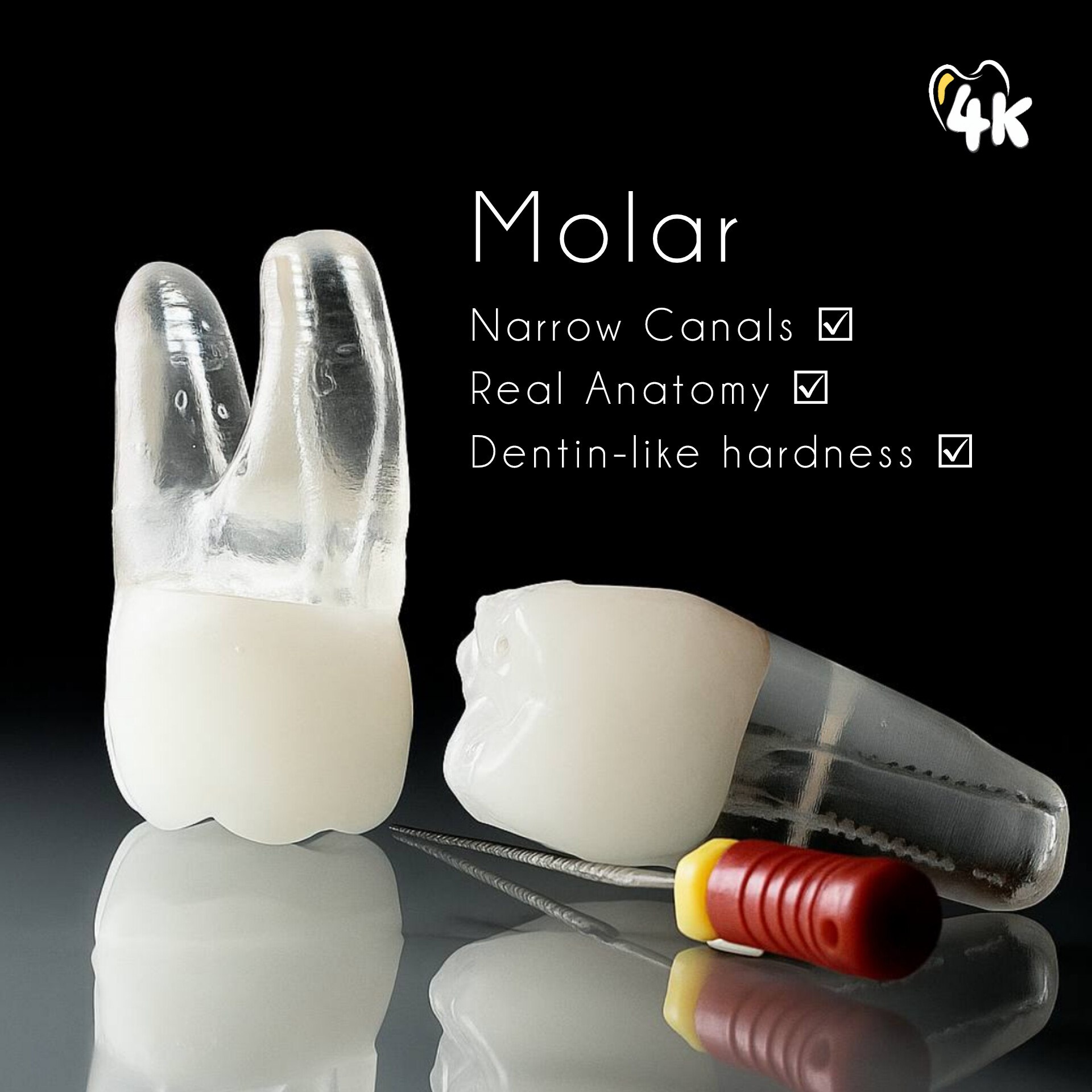
This stage runs on the Foundation Year set — four anatomically correct teeth that let the cohort repeat fundamentals until they are boring. Boring is the point.
Weeks 5–8 · Controlled difficulty
Now introduce curvature, but in a controlled gradient so the tactile lesson lands.
- Week 5 — Gentle curves; pre-curving hand files; the glide-path mindset.
- Week 6 — Moderate curves; rotary/reciprocation on a curve; recognising the outer-wall load.
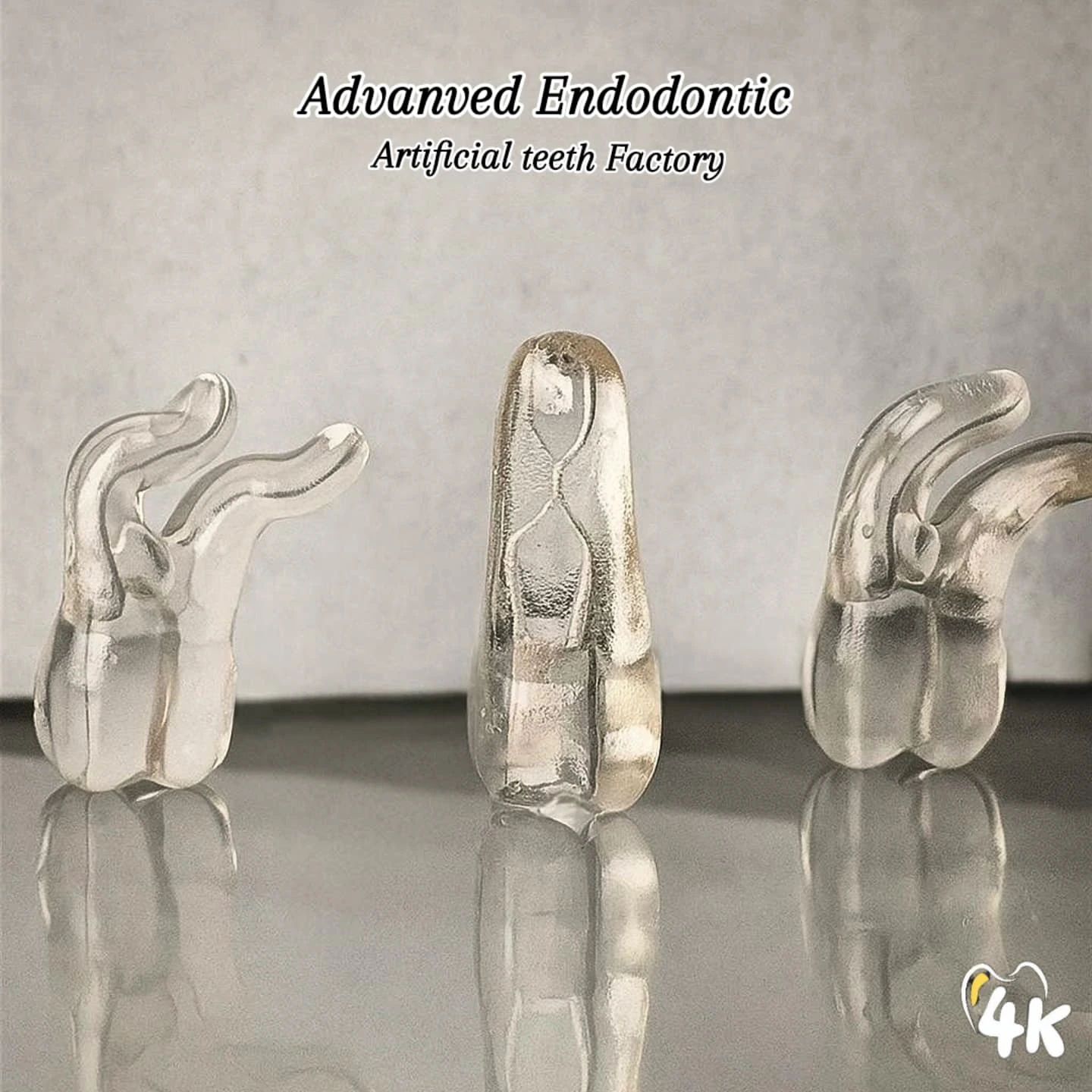
- Week 7 — Severe and S-shaped curves; transportation and how to avoid it.
- Week 8 — Integration: a full case under time, debriefed as a group.
This is the Pre-clinical Block territory — foundations plus four progressively harder curved canals, so the difficulty rises without breaking continuity.
Weeks 9–12 · Judgement
The final third is about decisions, not just hands. Students meet cases where the right move might be to stop.
- Week 9 — Multi-canal molar workflow under realistic load.
- Week 10 — A first separated-instrument scenario: retrieve, bypass, or refer?
- Week 11 — A perforation or ledge: repair strategy and when MTA earns its place.
- Week 12 — Capstone case + reflective debrief.
For programmes that push into complications at this stage, the Mishap Mastery set carries the separated-file, perforation, and rare-variant cases.
Three principles that make the block work
- One new variable per session. If a student is meeting curvature for the first time, do not also change the file system. Isolate the lesson.
- Debrief as a cohort. The highest-value minutes are the ten spent comparing how five students approached the same canal.
- Let them fail on the bench. A model is the only safe place to make — and feel — the mistake that teaches the rule.
Adapting it to your faculty
This is a starting arc, not a finished syllabus. A four-year curriculum will stretch it; a one-week workshop will compress it into a themed day. If you tell us your cohort size, contact hours, and where your students currently struggle, we will map a model mix to it.
Find your set in three questions or request a structured quote and we will draft a per-stage plan.